A hydraulic system problem is rarely solved by replacing one component without first understanding what caused it to fail. This guide provides a systematic approach to diagnosing common hydraulic problems before ordering replacement parts.
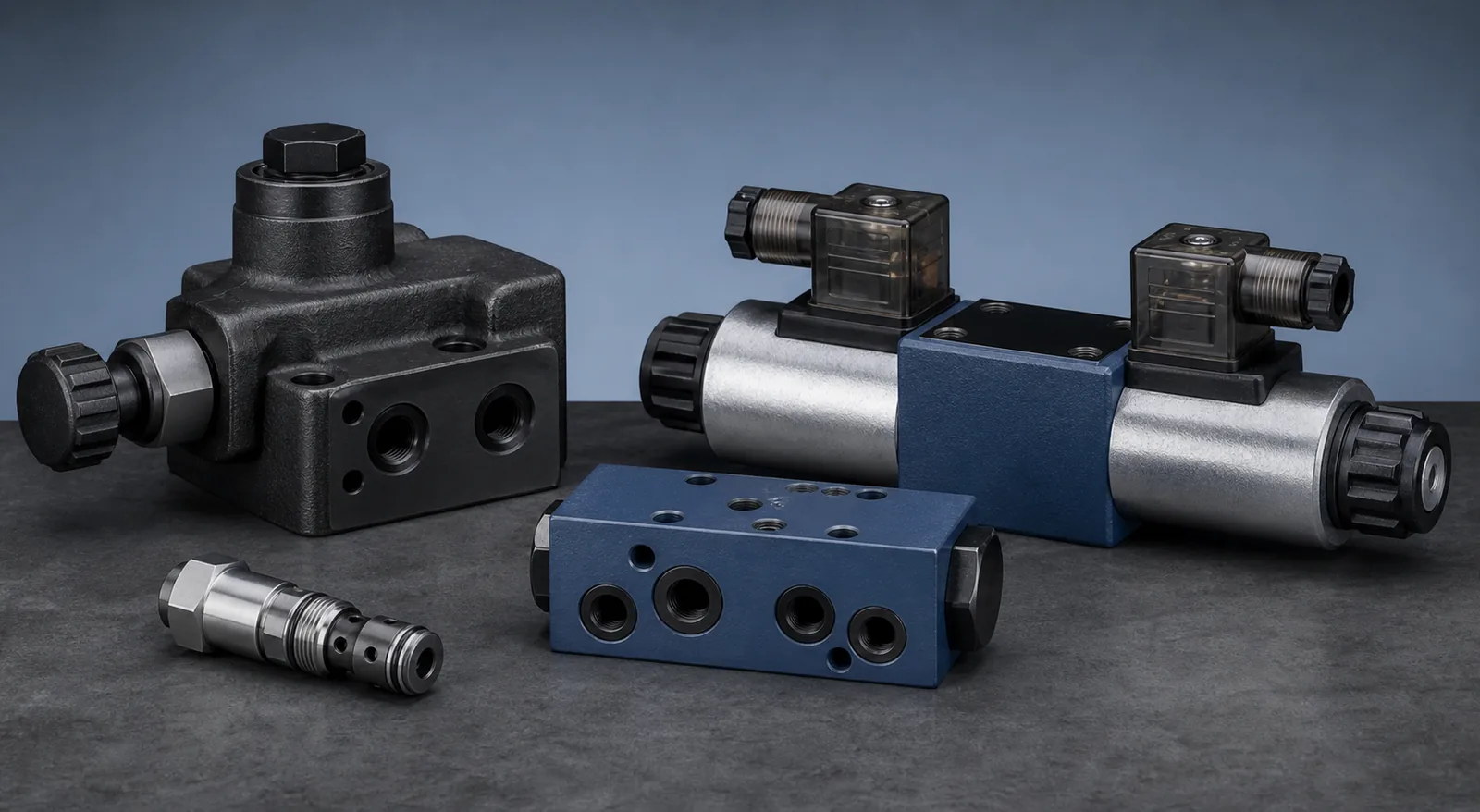
Send the original reference: Include the complete model code, quantity, destination and available photos or drawings.
Low or No System Pressure
| Possible cause | What to check | Before replacing |
|---|---|---|
| Relief valve open or set too low | Confirm setting with a pressure gauge at the pump outlet or relief valve test point | Adjust or clean the relief valve first. Replace only if the seat or spring is damaged. |
| Worn pump | Measure case-drain flow at operating pressure and temperature; compare with the pump's published case-drain limit | Rule out inlet restrictions, air ingress and excessive temperature before condemning the pump. |
| Internal valve leakage | Isolate circuit sections and measure pressure drop; feel for hot valve bodies indicating bypass flow | Test individual valves before replacing the pump. A bypassing relief or directional valve is cheaper to fix. |
| Damaged cylinder seal | Isolate the cylinder and check for drift under load; inspect for external rod leakage | Confirm the seal is the cause — a drifting load can also be caused by a leaking valve spool. |
Overheating
- Check the reservoir fluid level — low fluid reduces heat dissipation capacity
- Inspect the heat exchanger (air/oil cooler or water/oil cooler) for fouling, blocked airflow or coolant failure
- Measure pressure drop across return filters — a clogged filter forces fluid through the bypass, reducing cooling
- Check for continuous relief valve operation — a stuck-open relief or a misadjusted compensator can generate continuous heat
- Measure case-drain flow on pumps and motors — excessive internal leakage generates heat
- Confirm the fluid viscosity grade matches the ambient and operating temperature range
- Check for internal leakage through closed-center directional valves — a worn spool can bypass flow at rest
Adding a cooler without finding the heat source treats the symptom, not the cause. Start by measuring flow and pressure where energy is being converted to heat.
Noisy Pump
- Check for cavitation: restricted suction strainer, collapsed suction hose, high fluid viscosity or insufficient reservoir head
- Check for aeration: loose suction-line fittings, low reservoir level, faulty shaft seal or excessive return-line turbulence above the fluid surface
- Inspect the pump coupling: misalignment, wear, or loose elements can produce noise that sounds like a pump problem
- Check for trapped air: bleed the pump case and the highest point in the circuit
- Measure case-drain flow: an increase over time can indicate wear that also changes pump sound
- Confirm the drive speed is within the pump's published range
Cavitation and aeration damage pumps quickly. A noisy pump should be investigated immediately — do not run it hoping the noise will go away.
Slow or Erratic Actuator
- Confirm the pump is delivering flow: measure flow at the pump outlet or use a flow meter in the pressure line
- Check for a partially shifted directional valve: a sticking spool or inadequate pilot pressure can restrict flow
- Inspect flow-control valves for contamination or incorrect setting
- Check for external leakage at cylinder rod seals, fittings or hoses
- Check for internal cylinder leakage: isolate the cylinder and check for piston bypass under load
- Confirm the load has not changed: increased mechanical friction, binding or additional weight
- Check for air in the circuit: bleed the system and inspect the suction side
Cylinder Drift Under Load
- Isolate the cylinder with a shut-off valve or by blocking the ports — if drift stops, the problem is in the valve, not the cylinder
- If drift continues with the cylinder isolated, the piston seal is bypassing internally
- Check the directional valve spool for wear — a closed-center spool with excessive clearance can allow creep
- Check the counterbalance or load-holding valve for contamination or incorrect setting
- For vertical loads, confirm the load-holding valve pilot ratio is appropriate for the application
Related Product, Series & Technical Pages
Pump cavitation diagnosis
Check the inlet system before replacing the pump.
Open related page →Valve pressure drop and heat
Estimate power loss where high cycle flow creates excess heat.
Open related page →Relief valve adjustment
Understand the function and limits before adjusting settings.
Open related page →Request a replacement review
Send the failed component code, failure symptoms and machine data.
Open related page →