A hydraulic pressure relief valve protects the pressure line by opening a controlled path when its setting is reached. It is a safety-critical pressure-limiting device, not a routine flow-control method.
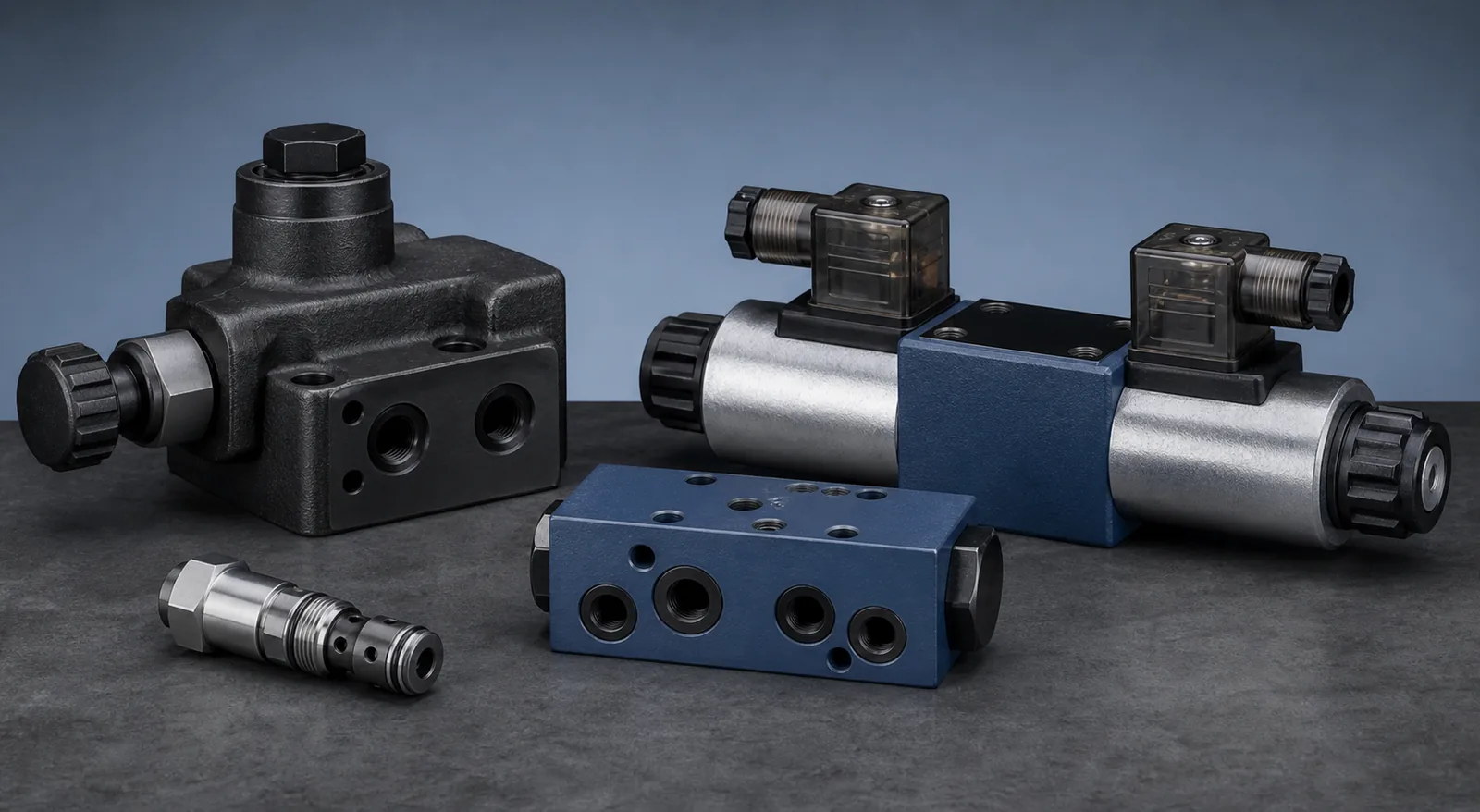
Source a hydraulic pressure relief valve.: Send the complete code, circuit function, setting range, pressure, flow, mounting, pilot or drain arrangement and destination.
How a relief valve works
- Direct-acting valves balance hydraulic force against an adjustable spring
- Pilot-operated valves use a pilot stage to control the main stage
- Cracking pressure begins flow; full-flow pressure is normally higher
- Tank-line backpressure can change the effective setting on some designs
- Pressure override and response affect heat, stability and protection
Safe setting verification
- Identify the exact valve, adjustment range and circuit location
- Use calibrated pressure measurement at the correct test point
- Follow the machine and valve manufacturer's commissioning procedure
- Adjust gradually under controlled flow and temperature conditions
- Lock, record and recheck the setting through the required operating cycle
Replacement information
- Relief function, direct or pilot operation and adjustment range
- Maximum pressure, rated flow and acceptable pressure override
- Inline, cartridge, subplate or modular mounting interface
- Pilot, vent, drain and tank backpressure arrangement
- Fluid, seals, temperature, contamination class and application duty