Buyers evaluating Chinese aftermarket hydraulic components face a recurring question: 'Is the saving worth the risk?' The answer depends on the product, the application, the supplier evidence and the buyer's ability to validate. This guide separates the sourcing routes, comparison criteria and decision factors so the choice is made on data, not assumption.
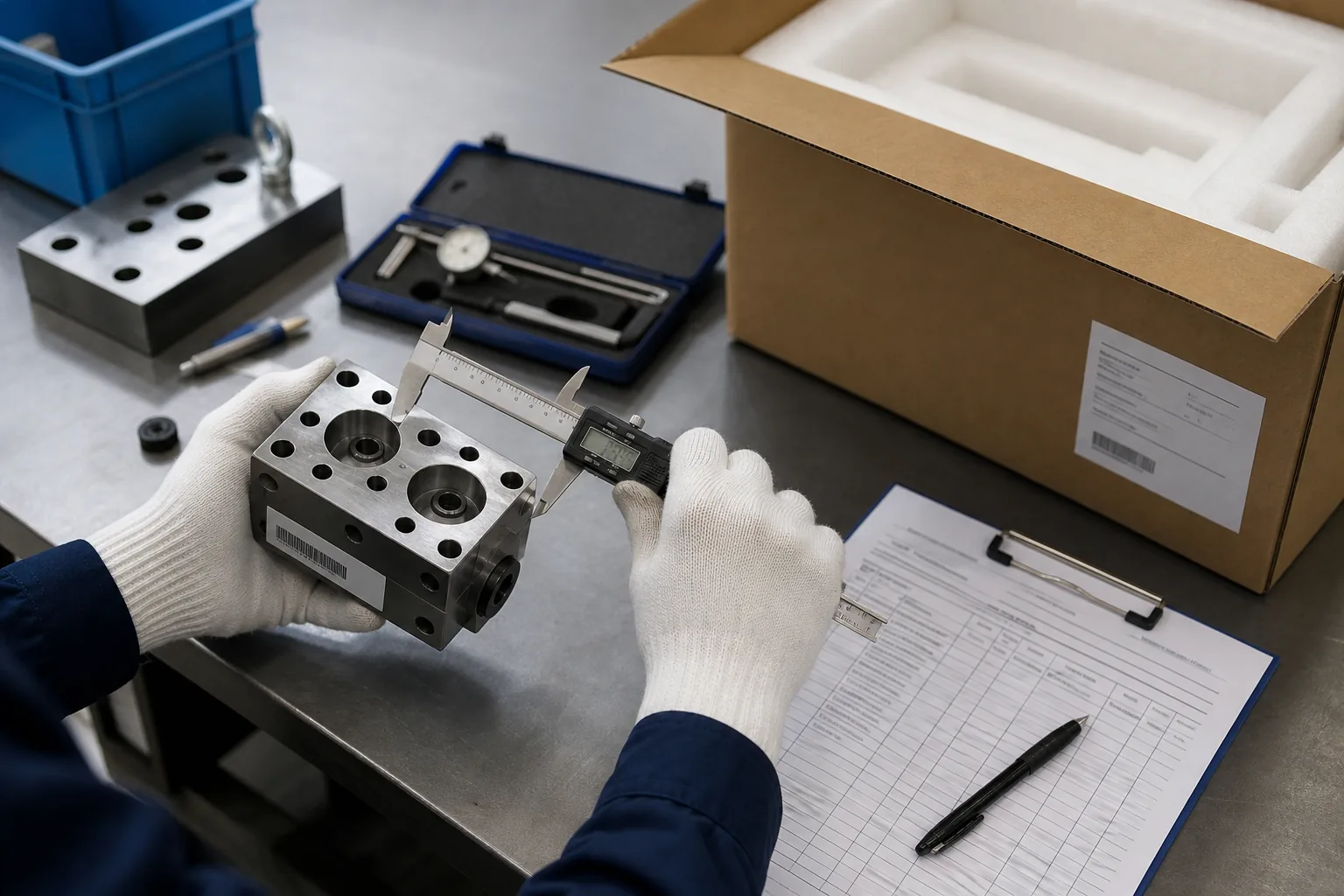
Send a hydraulic component for review: Include the complete model code, quantity, destination and available photos or drawings.
Three sourcing routes — labelled honestly
| Route | What it means | When it is appropriate | When it is not |
|---|---|---|---|
| Original / OEM | The component is sourced through the manufacturer's authorised channel, with manufacturer-controlled traceability | Safety-critical, warranty-sensitive or tightly controlled equipment; low tolerance for unverified changes | Obsolete models; when lead time or price makes the machine unviable |
| Aftermarket (documented) | An independently manufactured replacement with stated manufacturer identity, technical data and comparison evidence | Applications where the complete code, supplier data, differences and acceptance plan are documented | When supplier identity, comparison data or evidence is missing or refused |
| Remanufactured / service route | A used unit rebuilt to a defined scope with documented replacement parts, inspection and test records | Obsolete or expensive assemblies; when the remanufacturing process, parts and test records are transparent | When remanufacturing scope, replacement-part quality or test method cannot be confirmed |
"Aftermarket" without manufacturer identity, model basis or comparison data is not a documented alternative — it is an unidentified part.
Comparison dimensions — what changes between routes
| Factor | OEM route | Documented aftermarket route |
|---|---|---|
| Identity | Manufacturer-controlled serialisation and channel traceability | Supplier identity, model basis and supply records must be stated in the quotation |
| Price | Typically higher; premium for manufacturer channel assurance | Variable; saving requires data, not assumption — compare on the exact model, not the series |
| Lead time | Subject to manufacturer production schedule and distribution | May be shorter; depends on supplier readiness, location and shipping route |
| Compatibility basis | Original code still needs confirmation; configuration errors happen in OEM channels too | Requires line-by-line function, rating, interface and application comparison |
| Quality evidence | Manufacturer-controlled process, test and documentation | Varies by supplier; the quotation must state what evidence is available and how it is order-linked |
| Warranty | Manufacturer warranty terms apply | Supplier warranty terms, duration, claim evidence and exclusions must be in the accepted quotation |
| Validation burden | Usually lower — the product is traceable to the original specification | Higher — the buyer must review the comparison, accept documented differences and own the commissioning result |
Decision framework — when does aftermarket make sense?
- The complete original model code is available and the failure mode is understood
- The supplier has provided their legal identity, product scope and a model-specific comparison
- Key parameters — function, pressure, flow, mounting, interfaces, seals — have been compared
- Known differences are stated and the buyer has the technical capability to accept or reject them
- The application is not safety-critical or the acceptance path has been approved by qualified personnel
- The cost, lead-time or availability advantage is real, not assumed from a series-level comparison
- A sample, first-article or controlled commissioning plan exists for the initial order
If the supplier cannot state which manufacturer will make the part, on what model basis and with what comparison data, treat the quotation as an identification lead — not a ready-to-order option.
Documentation that separates a serious aftermarket quotation
- The original customer reference is preserved on the quotation
- The proposed manufacturer, model and supply route are identified
- A comparison record states what is confirmed, what differs and what remains open
- The quotation states the condition (new, remanufactured, service part), MOQ, lead-time basis and Incoterm
- Available inspection evidence and the required customer approval points are listed
- Warranty scope, duration, claim evidence requirements and exclusions are explicit
Related Articles
How to Source Hydraulic Pumps from China: A Practical Guide
A step-by-step guide for hydraulic distributors, repair shops and MRO buyers sourcing piston, vane and gear pumps from China — covering model codes, supplier screening and pre-shipment checks.
Read article →Pre-Shipment Inspection Checklist for Hydraulic Components from China
A practical pre-shipment inspection checklist for hydraulic valves, pumps, cylinders and motors sourced from China. Covers identity, dimensions, function, packing and documentation.
Read article →