A valve code can encode size, spool function, actuation, voltage, connector, seals and special options. A missing suffix can change the product.
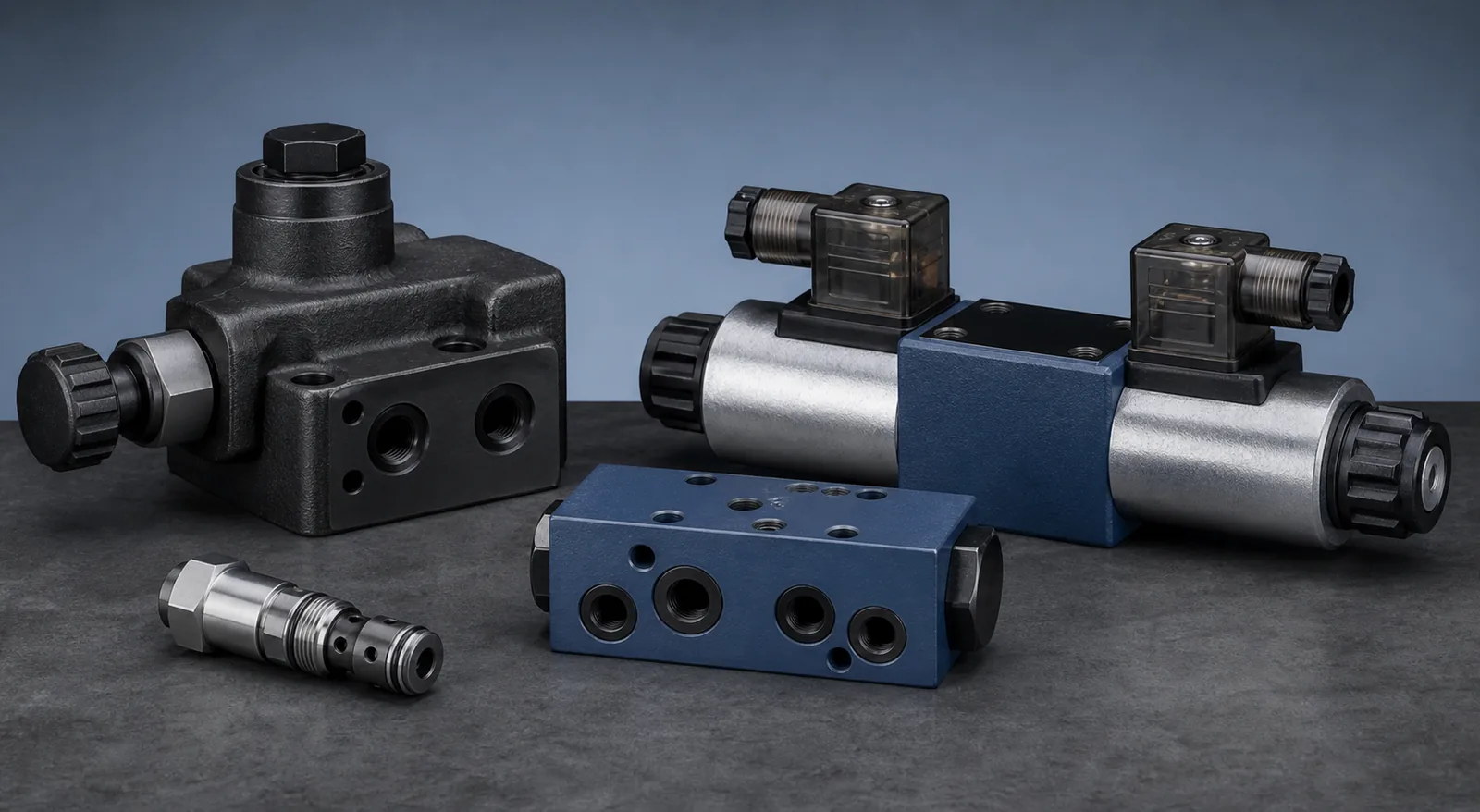
Send the original reference: Include the complete model code, quantity, destination and available photos or drawings.
Capture the code exactly
- Photograph the complete nameplate in focus
- Keep slashes, hyphens, spaces and suffixes
- Record the order number separately
- Photograph the connector and mounting face
Common code groups
| Code group | What it may control | Why omission is risky |
|---|---|---|
| Family and nominal size | Basic construction, mounting family and flow range | A similar family label does not prove the same interface or capacity |
| Spool or poppet function | Flow paths in each energized and de-energized state | The machine can move incorrectly even when the valve bolts on |
| Actuation and centering | Solenoid, pilot, manual, spring, detent or proportional behavior | The normal state and failure response may change |
| Electrical configuration | Voltage, current type, connector, electronics and feedback | Wrong voltage or pinout can damage the coil or controller |
| Seal and special options | Fluid compatibility, temperature, corrosion and certified variants | A standard seal or revision may not suit the application |
Before requesting a replacement
- State working pressure and flow
- Identify the machine and application
- Explain the known failure
- Provide a hydraulic schematic when available
Do not infer compatibility from a short family name. Different suffixes may change function, electrical connection or operating limits.
Worked intake example
Treat the nameplate and the machine as two evidence sources. A useful RFQ records the code exactly as shown, then adds the circuit symbol, coil label, mounting-face photo, pressure, flow and machine function. If a character is unreadable, mark it as unknown instead of guessing.
- Confirmed: characters visible on the plate, order number and physical interface
- Customer-provided: machine, duty, pressure, flow and failure symptoms
- To verify: suffix interpretation, revision, manufacturer data and proposed-model differences
- Release condition: hydraulic, electrical and mechanical checks accepted in writing