Mobile equipment can combine high pressure, shock loads, temperature changes and machine-specific controls. Model and machine data must be reviewed together.
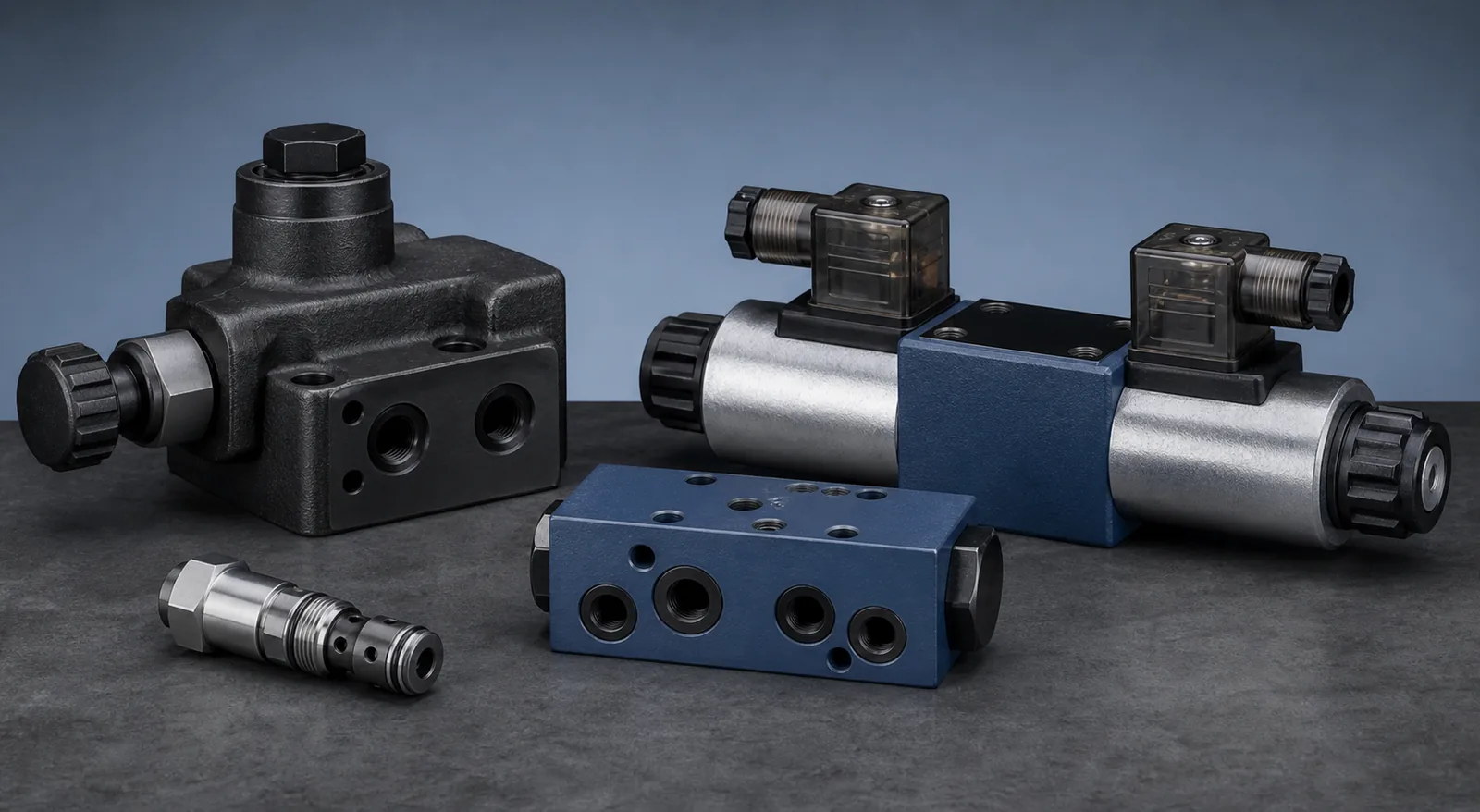
Review a component against the machine.: Include the machine model, full component code, control details, failure symptoms and installation photos.
Machine-linked identification record
- Machine manufacturer, model and year
- Component nameplate and complete code
- Pump rotation, shaft, flange and port layout
- Control, sensor and feedback configuration
- Operating symptoms and system history
Mobile equipment comparison matrix
| Subsystem | Replacement-sensitive details | Evidence before release |
|---|---|---|
| Main or implement pump | Control regulator, displacement, rotation, shaft, flange and ports | Full pump code, machine model, drive-side and port-side photos, operating pressure |
| Travel or swing motor | Displacement, brake, reduction interface, flushing and case drain | Motor and machine codes, mounting dimensions, hose layout and duty |
| Control valve | Section functions, relief settings, pilot logic and sensor connections | Hydraulic schematic, valve code, coil/sensor labels and port identification |
| Cylinder | Pin centers, bore, rod, stroke, cushioning and port location | Drawing or measured geometry, load direction, pressure and speed |
Conditions that must not be hidden by a cross-reference
- Cold-start viscosity, high ambient temperature and contamination exposure
- Shock loads, overrun, braking and load-holding consequences
- Electronic displacement control, feedback calibration or controller compatibility
- Hose clearance, case-drain routing, charge pressure and commissioning procedure
A physical fit is not proof of correct control behavior. Pump, motor and valve changes on mobile equipment require a machine-level commissioning plan.
Controlled validation for higher-risk replacements
Before batch purchase, define measurable acceptance criteria such as standby pressure, case-drain flow, operating temperature, machine cycle time, response and leakage. Record the original settings before removal so the trial has a usable baseline.
Related Product, Series & Technical Pages
Hydraulic motors
Review orbital, piston, travel and swing motor requirements.
Open related page →Pump inlet diagnosis
Rule out suction and contamination problems before replacement.
Open related page →Hydrostatic transmission basics
Understand pump, motor, charge and control interactions.
Open related page →