A clear cylinder quotation needs both dimensions and operating conditions. A drawing is the best starting point.
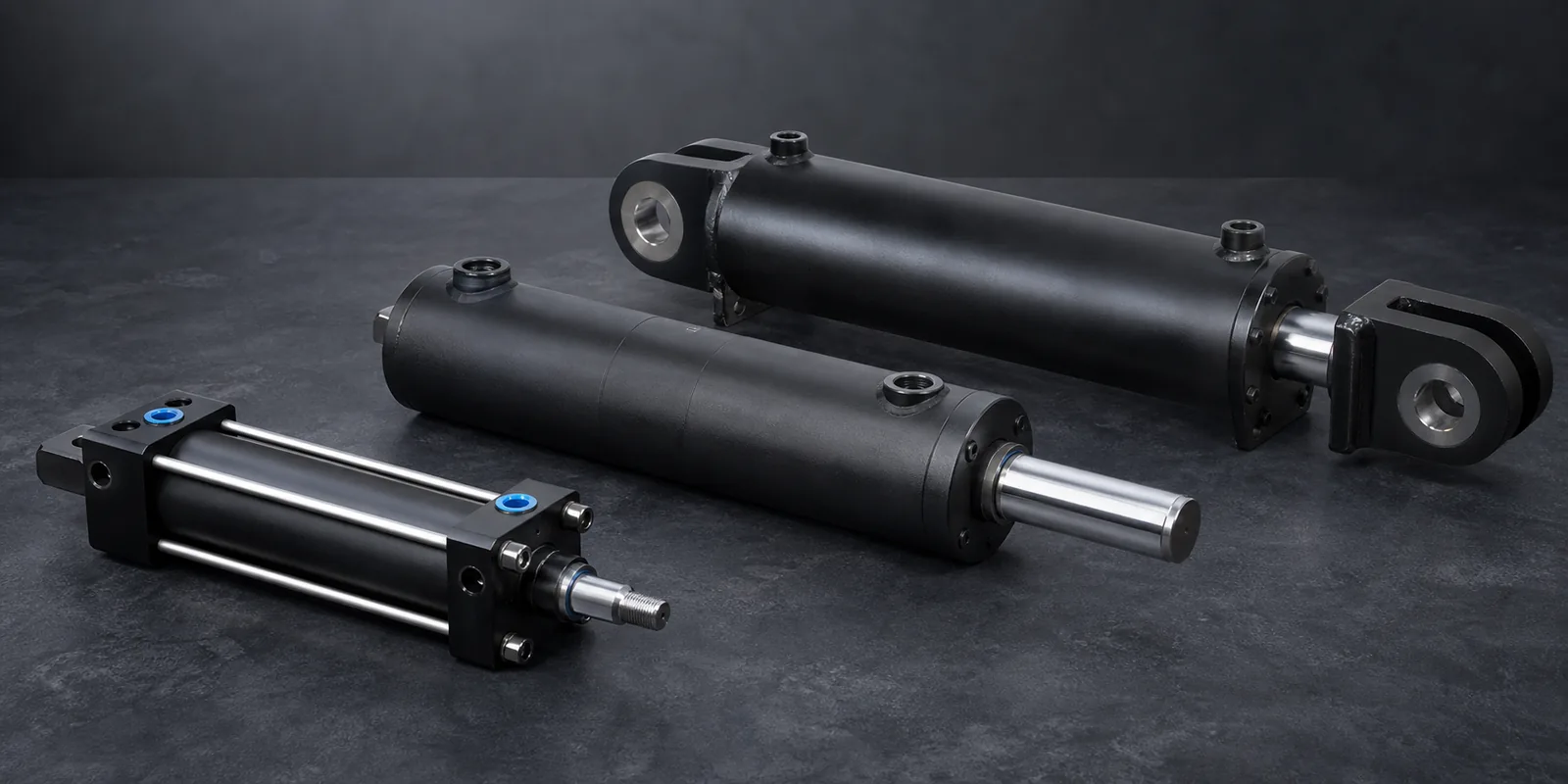
Send the original reference: Include the complete model code, quantity, destination and available photos or drawings.
Dimensional information
- Bore and rod diameter
- Stroke and retracted length
- Mounting style and pin dimensions
- Port location, size and thread
- Rod end and installation envelope
Operating conditions
- Working and test pressure
- Push and pull load
- Extension and retraction speed
- Duty cycle and environment
- Fluid, temperature and seal requirement
Commercial information
- Prototype and annual quantity
- Required delivery date
- Inspection or test documents
- Surface treatment and packing
- Destination and Incoterm preference
Minimum drawing dataset
| Drawing area | Required dimensions or notes | Common omission |
|---|---|---|
| Barrel and stroke | Bore, stroke, closed length and maximum open length | Stroke is given without the pin-to-pin installed lengths |
| Rod and end | Rod diameter, thread, eye or clevis geometry and orientation | Rod-end rotation or wrench flats are not defined |
| Mounting | Base, trunnion, flange, clevis or pin dimensions and tolerances | Pin diameter is shown without width, centerline or bearing detail |
| Ports and cushioning | Thread, size, location, orientation, cushioning and bleed points | Port standard is guessed from nominal size |
| Materials and finish | Tube, rod surface, seals, corrosion finish and environment | A generic material callout ignores salt, dust or temperature |
Force, speed and stability checks
Bore and pressure determine theoretical push force; annular area controls pull force. Flow and effective area determine nominal speed. Side load, buckling, cushioning, pressure loss and efficiency still require engineering review.
- State whether the quoted load is push, pull, static holding or dynamic.
- Provide the actual pressure available at the cylinder, not only the pump rating.
- Identify vertical loads, side loads, long strokes and guidance outside the cylinder.
- Define the acceptance test: dimensions, leakage, pressure hold, function and documentation.