Pump noise is a symptom with several causes. Cavitation, air ingestion, mounting stiffness, viscosity and wear each need a different fix.
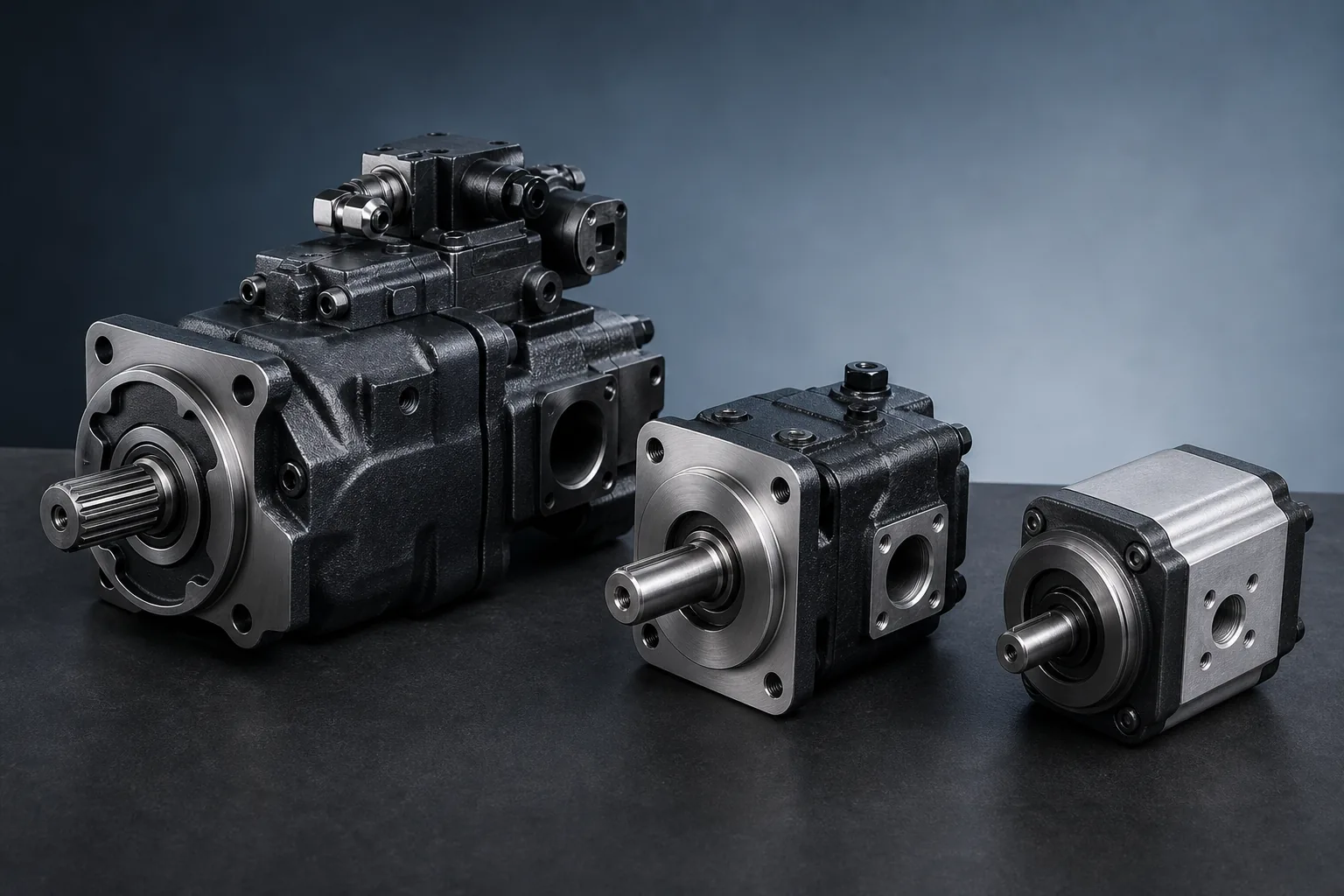
Send a hydraulic component for review: Include the complete model code, quantity, destination and available photos or drawings.
First checks
- Inlet filter and suction line condition—restriction causes cavitation
- Air leaks at the suction side, shaft seal or reservoir return
- Oil level and return-line aeration
- Fluid viscosity at operating temperature
Cavitation vs aeration
| Symptom | Likely cause | Check |
|---|---|---|
| High-pitched rattle under load | Cavitation from restricted inlet | Suction filter, line size, oil level |
| Crackling or knocking with foam | Air ingestion | Suction fittings, shaft seal, return line |
| Whine that changes with temperature | Viscosity too high or too low | Fluid grade and temperature |
| Metal knock or constant rough tone | Wear or bearing damage | Flow test, disassembly, inspection |
Before condemning the pump
- Confirm inlet pressure and temperature with gauges
- Inspect the coupling and mounting for looseness
- Run the pump isolated from the circuit where the procedure permits
- If replacement is needed, order from the complete model code and nameplate