Most hydraulic component failures are contamination-related. A practical sampling and filtration program protects pumps, valves and cylinders better than any spare-part stock.
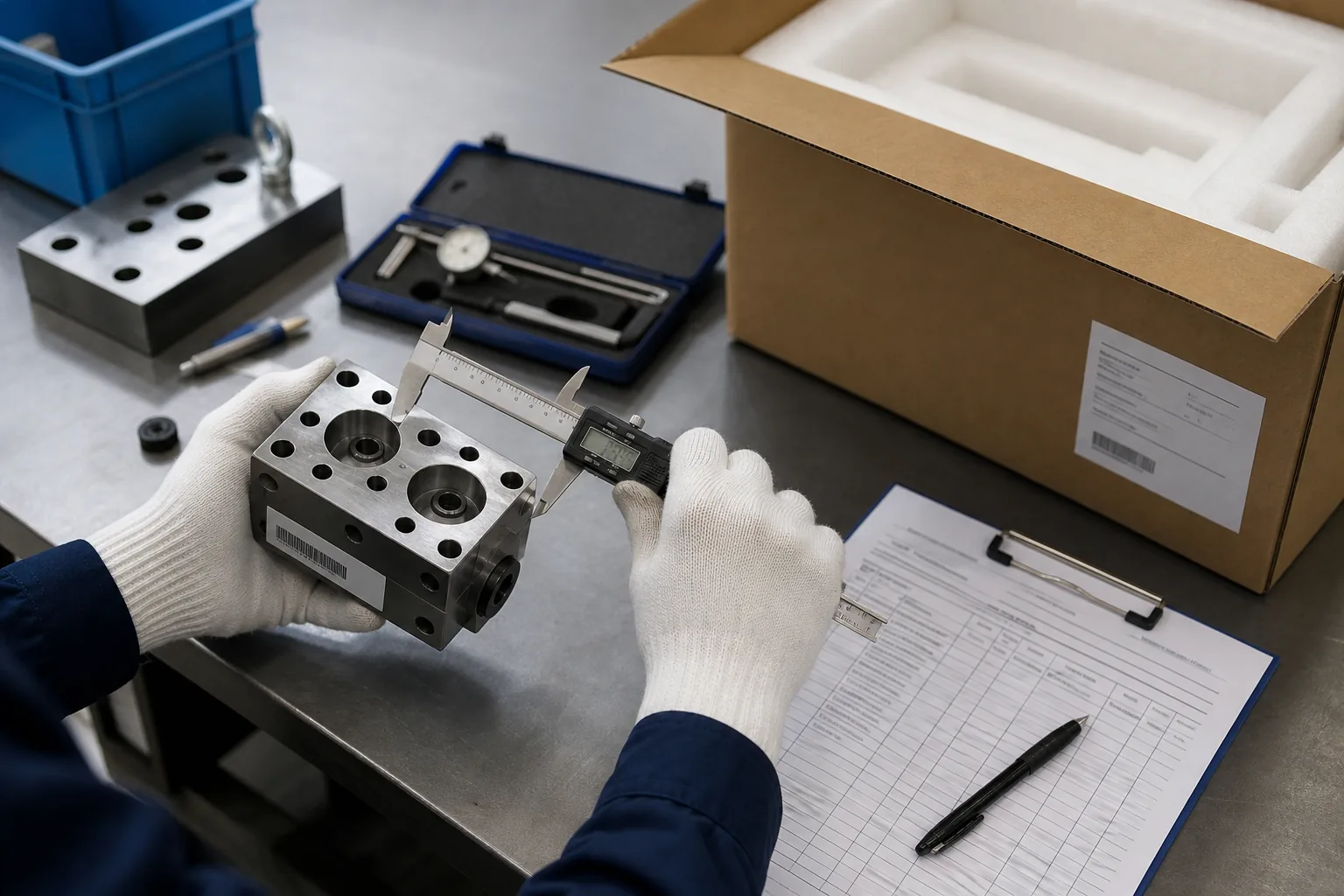
Send a hydraulic component for review: Include the complete model code, quantity, destination and available photos or drawings.
Contaminant types
- Particles—ingress through seals, breathers and new fluid
- Water—from condensation, cooling leaks or washdown
- Chemical change—oxidation, varnish and additive depletion
- Air—foam and poor response when the reservoir cannot degas
Reading a cleanliness code
- ISO 4406 reports particle counts in three size ranges
- The target code depends on component sensitivity and pressure
- Compare lab results against the machine or component target
- Sample from a live system at a clean, representative point
Filter placement
| Filter type | Purpose | Check |
|---|---|---|
| Suction strainer | Protect the pump from large debris | Cleanliness and restriction |
| Return-line filter | Remove wear and ingress particles | Bypass indicator and element condition |
| Pressure filter | Protect sensitive valves | Rating, delta P and element life |
| Offline kidney loop | Improve cleanliness during idle time | Flow, rating and service interval |
Sampling discipline
- Sample at operating temperature from a live return or drain line
- Use clean bottles and avoid topping up before sampling
- Record hours, fluid brand, grade and any recent work
- Trend results over time instead of judging one sample