A seal kit must match the component's exact revision, material and application. Choosing by 'looks the same' risks early failure or wrong hardness.
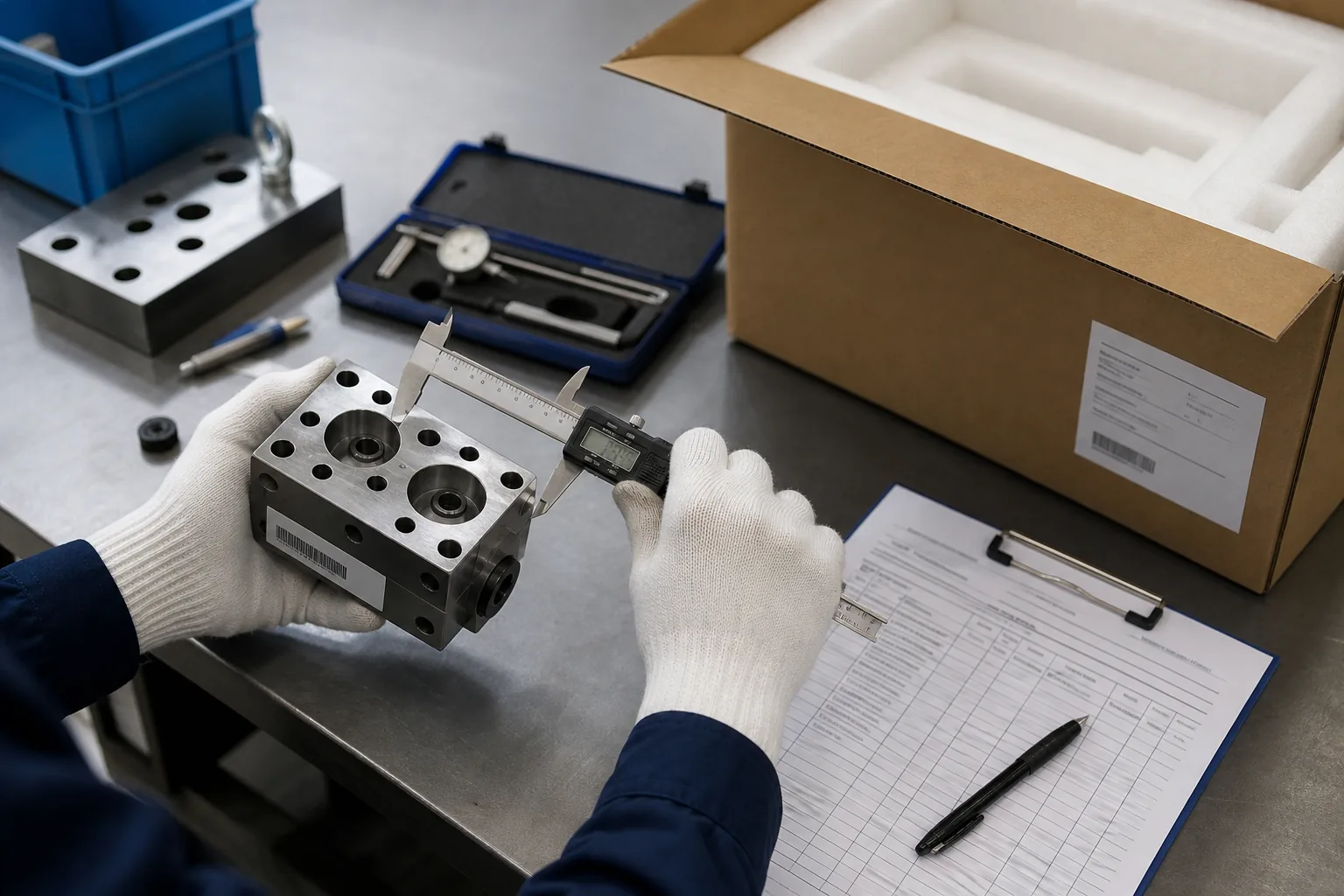
Send a hydraulic component for review: Include the complete model code, quantity, destination and available photos or drawings.
What a kit must match
- The complete parent-unit model code and design revision
- Seal material compatible with the fluid and temperature
- Hardness and profiles for the working pressure and speed
- Rod, piston, static and wiper seals as a matched set
Material basics
| Material | Strength | Watch for |
|---|---|---|
| NBR | General mineral-oil duty, low cost | High temperature and exotic fluids |
| FKM | Higher temperature and chemical resistance | Cost and some fluid incompatibilities |
| PU | Excellent wear for rod seals | Water and hydrolysis in some grades |
| PTFE-based | Low friction, wide compatibility | Backup ring and profile design |
Before ordering
- Photograph the nameplate and the seal grooves
- Measure bore, rod, groove and gland dimensions
- Confirm the fluid, temperature range and working pressure
- State whether the kit is for a cylinder, pump, motor or valve
- Keep the original kit bag or part number when available